

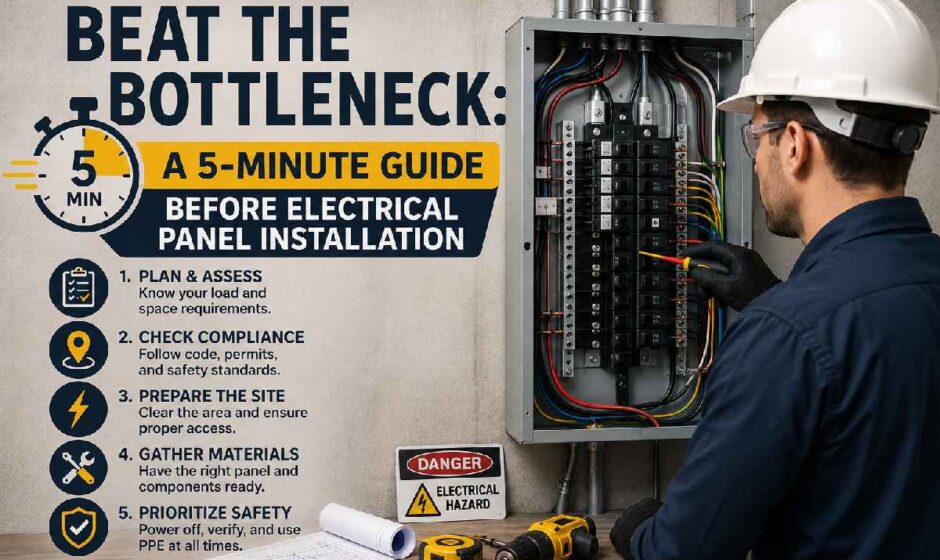

Five minutes. That is about how long it can take to catch the small details that otherwise turn an electrical project into a scheduling mess. The crew is ready. The equipment is supposed to be on-site. Then someone discovers the panel does not match the project requirements, or the required components are missing.
Nobody enjoys that phone call. Before starting electrical panel installation, contractors can use a quick pre-installation check to catch common sourcing and scheduling problems before they reach the jobsite.
1. Check the Panel Rating
Start with the number that matters most: the panel’s electrical rating. Confirm that the selected equipment matches the requirements of the property and the planned installation. Contractors should review the required amperage, voltage, phase configuration, and other applicable specifications before work begins.
This sounds obvious. It is also surprisingly easy to overlook when several projects are moving at once. Do not rely on appearance alone. Two panels can look nearly identical while having different technical specifications.
2. Match the Panel to the System
Next, check compatibility. The panel needs to work with the existing electrical system and the components intended for the installation. Review breaker compatibility, connection requirements, enclosure specifications, and relevant product information.
For replacement work, this step deserves extra attention. The fact that a new panel resembles the old one does not automatically make it a suitable replacement.
A five-minute comparison now is preferable to discovering the mismatch after the old equipment is already removed.
3. Confirm the Breakers and Components
A panel without the right supporting components is not much use. Before installation begins, confirm that the required breakers and other necessary components are available and compatible with the selected panel. Check quantities, model information, and project requirements against what is actually on-site.
This is particularly important when a project has a tight schedule. One missing component can hold up work that was otherwise ready to proceed.
And yes, someone will eventually say, “I thought those were already ordered.” Better to find out before the toolbox comes out.
4. Verify What Has Actually Arrived
Do not assume the delivery matches the purchase order. Open the box and check. Confirm the panel model, rating, quantity, condition, and identifying information. If the equipment is new, used, or refurbished, make sure its condition matches what was expected when it was sourced.
Contractors sourcing equipment can also review suppliers such as Verified Breakers when evaluating options for upcoming electrical projects.
The goal is simple: make sure the equipment at the jobsite is the equipment the project actually calls for.
5. Take One Last Look at the Schedule
Finally, check timing. Is everything required for the installation on-site? Are the necessary quantities available? Are other trades scheduled around the electrical work? Has anything changed since the original order?
These questions take little time, but they can expose a bottleneck before it becomes one. If something is missing, discovering it before the crew begins gives the contractor a chance to adjust the schedule or source the component rather than losing productive hours.
The Five-Minute Rule
A pre-installation check does not need to become a lengthy meeting. Five focused minutes can be enough to review the panel rating, system compatibility, breakers, delivered equipment, and schedule. That small pause can help prevent avoidable delays and sourcing surprises.
Electrical work already has enough variables. There is little reason to add “we ordered the wrong panel” to the list.
Before electrical panel installation begins, stop, check the details, and make sure the job has what it needs. Five minutes at the start can save considerably more time once the work is underway.